
Horses have a remarkable ability to teach us patience, humility, and perseverance. Sometimes all in the same 45-minute lesson.
One day, you and your horse feel like an unstoppable team. The next, you're struggling with something you've done a hundred times before. Add competition nerves, unexpected setbacks, or a crisis of confidence, and it's easy to start questioning your abilities.
That's where equestrian resilience comes in.
Resilience isn't about being fearless, never getting frustrated, or pretending every ride was wonderful. It's about learning how to navigate challenges, recover from disappointments, and keep moving forward without letting one difficult moment define your entire riding journey.
And just like your riding skills, your mental skills can improve with practice.
What Is Equestrian Resilience?
Equestrian resilience is a rider's ability to adapt, recover, and maintain perspective through the physical and emotional challenges of working with horses.
It might look like:
- Regaining confidence after a fall or frightening experience.
- Handling a disappointing competition without losing motivation.
- Staying patient when your horse's training progresses more slowly than expected.
- Managing frustration when a lesson doesn't go according to plan.
- Returning to riding after an injury or extended break.
- Remembering why you love horses when riding starts feeling more stressful than fun.
Resilience doesn't mean pushing through every situation. Sometimes the strongest decision is to slow down, ask for help, change your approach, or give yourself and your horse a break.
It's also important to remember that riding is a partnership. Your horse has physical needs, emotions, and limitations of their own. Developing resilience means learning to respond thoughtfully to those realities rather than expecting everything to go perfectly.
Building Mental Strength Starts Between the Ears
Riders spend countless hours developing physical skills: improving their position, refining their aids, and learning to communicate more effectively with their horses.
But how much time do we spend practicing the way we think?
Our internal dialogue can influence how we approach a difficult exercise, interpret a mistake, or respond when things get uncomfortable.
Consider the difference between these two thoughts:
- "I always mess this up. I'm terrible at riding."
- "That didn't work. What can I adjust and try differently?"
The second thought doesn't deny the difficulty. It simply leaves room for learning.
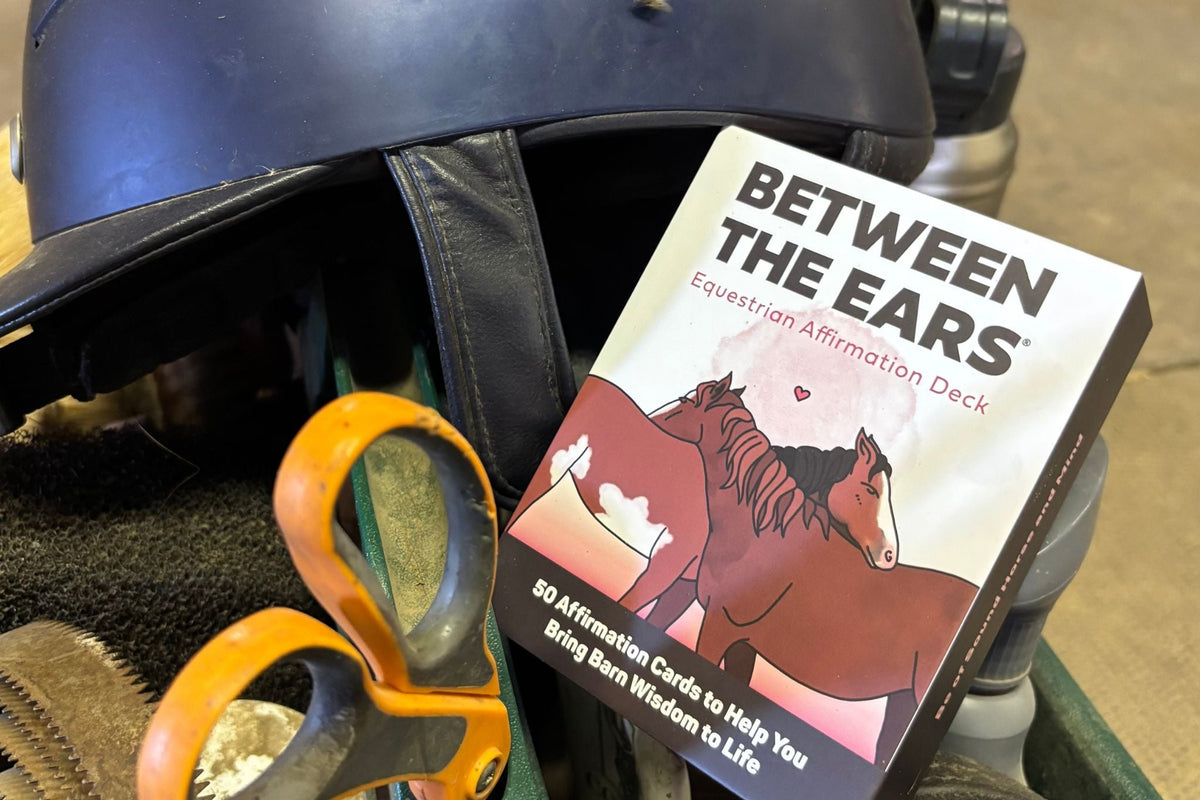
That's part of the inspiration behind Between the Ears®, Stable Mind's deck of 50 equestrian affirmation cards. Each card offers a little horse-centered wisdom, encouragement, or perspective to help interrupt unhelpful thinking patterns.

You might draw a card before heading to the barn, reflect on one after a difficult ride, or use a message as a starting point for a conversation with your trainer.
Affirmation cards aren't a substitute for professional mental performance training, but they can serve as a daily ritual to help create a more constructive relationship with your thoughts.
And sometimes, that small shift is exactly what you need.
Frequently Asked Questions
Mental training isn't just for Olympic riders or people struggling with major confidence problems. Riders of all disciplines and experience levels can benefit from developing better focus, emotional regulation, and resilience.
Here are some of the most common questions about equestrian sports psychology.
What is equestrian sports psychology?
Equestrian sports psychology applies psychological principles and mental performance techniques to the challenges of riding and competing with horses.
It focuses on the mental skills that influence performance, including confidence, concentration, motivation, emotional regulation, and the ability to recover from setbacks.
Unlike many sports, equestrian activities involve two athletes: the rider and the horse. Riders must manage their own thoughts and emotions while remaining attentive to another living being.
Sports psychology can help riders develop strategies for:
- Managing nerves before lessons or competitions.
- Maintaining concentration during challenging exercises.
- Recovering mentally after mistakes or setbacks.
- Building confidence following an injury or fall.
- Establishing realistic goals and productive training habits.
- Managing pressure and expectations.
You don't need to compete to benefit. Recreational riders, adult amateurs, and people returning to horses after time away can all use mental training to make riding more enjoyable and rewarding.
How can sports psychology improve my performance in equestrian sports?
Sports psychology can help you develop the mental skills needed to perform more consistently, particularly when you're under pressure.
For example, you might ride beautifully at home but struggle to reproduce that performance in the show ring. Or you might know exactly how to ride an exercise but become distracted by self-doubt.
Mental performance training helps you recognize these patterns and develop practical strategies for responding to them.
Some common areas of improvement include:
- Focus: Learning to concentrate on the next movement, obstacle, or instruction rather than worrying about past mistakes.
- Confidence: Building trust in your preparation and abilities without expecting perfection.
- Emotional regulation: Recognizing frustration, fear, or nervousness and responding constructively.
- Consistency: Creating mental routines that help you approach training and competition with a clearer mindset.
- Resilience: Recovering from disappointing performances without allowing them to undermine your long-term progress.
The goal isn't to eliminate every negative thought. It's to become better at noticing those thoughts without letting them dictate your decisions.
Are there specific mental training exercises for equestrians?
Yes! Many mental training exercises used in other sports can be adapted to riding.
Here are five worth practicing.
1. Visualization before riding
Before your lesson or competition, take a few minutes to mentally rehearse a successful ride.
Imagine the rhythm of your horse's movement, the feel of balanced turns, and the specific aids you'll use.
Rather than imagining only a flawless performance, practice visualizing how you'll calmly recover if something doesn't go as planned.
2. A pre-ride breathing routine
Before mounting, take several slow, comfortable breaths and consciously relax your shoulders, jaw, and hands.
Use the moment to notice how you're feeling rather than immediately judging yourself for being nervous.
A short breathing routine can become a familiar signal that it's time to focus on your horse.
3. Constructive self-talk
Pay attention to what you tell yourself during challenging rides.
When you notice an unhelpful thought, practice replacing it with something more specific and useful.
Instead of "I can't do this," try "I can slow down and work through one step at a time."
This is a great opportunity to incorporate Between the Ears® affirmation cards into your riding routine. Choose a card that resonates with you and use its message as a reflection prompt before or after your ride.

4. Process-based goal setting
Rather than focusing exclusively on outcomes like winning a class or jumping a certain height, set goals based on actions within your control.
For example:
- Maintain a steady rhythm through the entire exercise.
- Give clearer, more consistent aids.
- Stay focused on the current movement instead of the next one.
- Respond calmly when your horse makes a mistake.
Process goals give you something constructive to work toward regardless of the final result.
5. A post-ride reflection
After each ride, ask yourself three questions:
- What went well?
- What did I learn?
- What is one thing I'd like to work on next time?
This simple exercise helps you recognize progress without ignoring areas that need improvement.
Over time, you'll build a more balanced understanding of your riding journey.
What techniques do equestrian sports psychologists recommend for managing competition anxiety?
Competition anxiety is common among equestrians, including experienced riders.
You might feel nervous about being judged, making mistakes, disappointing your trainer, or performing in an unfamiliar environment.
Mental performance professionals often use a combination of techniques to help athletes manage these feelings.
Develop a consistent pre-competition routine. Establish a familiar sequence for warming up, preparing equipment, breathing, and mentally reviewing your goals.
Use visualization. Rehearse your test, course, or pattern in advance, including how you'll respond if something unexpected happens.
Practice controlled breathing. Slow, comfortable breathing can help regulate physical tension and bring your attention back to the present.
Focus on controllable actions. You can't control the judge's score, other competitors, or every reaction your horse might have. You can focus on preparation, communication, and your next decision.
Reframe nervousness. Instead of treating every nervous sensation as evidence that something is wrong, recognize that some physical activation is a normal part of preparing for an important performance.
Create a reset strategy. Choose a simple cue, such as relaxing your shoulders or returning your attention to your horse's rhythm, to help you refocus after a mistake.
One useful exercise is to select a Between the Ears® card the evening before a competition and reflect on how its message relates to your goals.
You can also bring that perspective into your warm-up. Rather than demanding a perfect performance, remind yourself that your job is to ride thoughtfully, communicate clearly, and adapt to the horse underneath you.
If anxiety is persistent, overwhelming, or interfering with your ability to ride safely, consider seeking individualized support from a qualified professional.
How do I find a qualified equestrian sports psychologist near me?
Start by looking for a licensed psychologist with sports psychology expertise or a qualified mental performance consultant who works with equestrian athletes.
One useful resource is the Association for Applied Sport Psychology (AASP), which maintains a searchable directory of Certified Mental Performance Consultants (CMPCs).
You can also ask your trainer, riding club, or fellow competitors for recommendations.
When evaluating potential professionals, consider asking:
- What qualifications and certifications do you hold?
- Have you worked with equestrian athletes before?
- Do you specialize in competition anxiety, confidence, or recovery from setbacks?
- What does a typical mental training program involve?
- Do you offer virtual appointments?
- How do you approach communication between riders and coaches?
It's important to distinguish between mental performance consultants and licensed mental health professionals. CMPC certification demonstrates specialized mental performance training, but it does not automatically qualify someone to diagnose or treat mental health conditions.
If you're experiencing significant anxiety, trauma-related symptoms, or other mental health concerns, look for an appropriately licensed mental health professional with relevant experience.
And don't assume you need to find someone in your immediate area. Virtual mental performance sessions may give you access to professionals with more specific equestrian experience, subject to applicable licensing requirements.
How can I become more resilient after a bad ride or disappointing competition?
Start by giving yourself permission to be disappointed.
Resilience doesn't require pretending you aren't frustrated. It means learning how to process those feelings without allowing them to become permanent judgments about your abilities.
Try this simple approach:
- Acknowledge what happened. Describe the experience without exaggerating it. "We struggled with our transitions today" is more useful than "I'm a terrible rider."
- Separate the result from your identity. One difficult ride doesn't erase your experience, progress, or potential.
- Look for useful information. Was the challenge related to preparation, communication, physical discomfort, or something else?
- Choose one constructive next step. Maybe you need to revisit a foundational exercise, discuss the experience with your trainer, or give your horse a day off.
- Remember the bigger picture. Riding is a long-term relationship with an animal, not a continuous series of performances that must prove your worth.
A small reflection ritual can help here, too. Draw a Between the Ears® card, write down one thing you learned, or revisit a favorite memory with your horse.
Sometimes resilience means getting back in the saddle. Other times, it means knowing when to step away, regroup, and return with a clearer perspective.

Resilience Is a Skill You Build, Not a Personality Trait You Have or Don't
Every rider experiences setbacks. Even the most accomplished equestrians have difficult rides, moments of self-doubt, and days when their horses seem determined to rewrite the entire training plan.
What matters isn't avoiding those experiences. It's learning how to respond to them.
Mental training gives you practical ways to manage pressure, recognize progress, recover from disappointments, and approach challenges with more flexibility.
And you don't have to wait until something goes wrong to begin.
Practice a breathing routine before your next lesson. Set one process-based goal. Pay attention to your self-talk. Celebrate a small improvement that might otherwise go unnoticed.
The goal isn't to become a rider who never struggles.
It's to become a rider who knows that struggling doesn't mean you're failing.